Showing posts with label microsoft. Show all posts

Tuesday, 19 July 2011

Nokia to slash all phone prices in September


Nokia plans to slash prices across its entire product line this September in an attempt to bolster sales, according to industry insider Eldar Murtazin, who is known for often accurately reporting inside information pertaining to Nokia and other smartphone vendors. Murtazin posted the following message on his Twitter account: "Nokia are going to cut prices for the whole product line by 10 per cent in September. They struggle for a market share worldwide."

Nokia's share of the global cell phone market has been steadily declining in recent months. The company's solution has been to dump Symbian in favor of Microsoft's Windows Phone operating system. Still, the transition period is going to be a long and hard one, and the company knows it. Apparently Espoo believes the solution is lower prices.

Nokia's first Windows phone, codenamed Sea Ray, looks nearly identical to the recently-announced Meego-based N9 smartphone, but it's running Microsoft's Windows Phone operating system. Nokia's first Windows Phone 7 handset(s) will be launching in Europe later this year: France, Germany, UK, Spain, Italy, and the Netherlands have been confirmed.

Five months ago, Nokia announced that it was choosing Microsoft's Windows Phone as its primary smartphone platform. Three months ago, Nokia and Microsoft finally signed a definitive agreement regarding their global mobile ecosystem partnership.

Windows Phone 7.5 (codenamed Mango) is expected to begin rolling out this fall (check out our preview from last month). There is talk that Microsoft is already working on the next Windows Phone updates, codenamed Tango and Apollo. Last year, we heard of that the second major update to Windows Phone will be Apollo, due toward the end of 2012. At some point Microsoft will have to release Windows Phone 8. One of these updates could indeed be Windows Phone 8, or an update to Windows Phone 8.

It's generally accepted that Windows Phone is not selling well. AT&T Mobility CEO believes things will start to pick up with codename Mango and as the Windows Phone Marketplace gains more apps. Nokia CEO Stephen Elop meanwhile argues that Windows Phone scores better than Android and iPhone with consumers, but OEMs are doing their best work for Android. He believes that once Nokia starts doing its best work for Windows Phone, the platform will take off. Microsoft says it dreams of selling 100 million Windows phones per year.

Thank you :
http://www.techspot.com/news/44741-nokia-to-slash-all-phone-prices-in-september.html

Microsoft offers $250,000 bounty for Rustock operators


Microsoft may have incapacitated the notorious Rustock botnet this year, but the company is still hunting those who were running the show. In March, Redmond paired up with federal law enforcement agents to seize computer equipment from US Internet hosting facilities to cripple the million-machine-strong network. Besides accounting for a sizable portion of the world's spam, Rustock committed other crimes, including advertising counterfeit or unapproved versions of pharmaceuticals, and violating the trademarks of Pfizer and Microsoft.

Only two weeks after being taken offline, global spam ratesdeclined some 33.6% according to a Symantec MessageLabs Intelligence report. There are still hundreds of thousands of computers infected by Rustock, the total infection base has shrunk by half. Although the botnet has remained inactive since March 16, the former operators remain at large and Microsoft is committed to tracking them down. In a blog post today, the company announced a new initiative to augment the company's civil discovery efforts: money -- and lots of it.

Hoping to hasten the arrest of those responsible for Rustock, Redmond has put out a bounty (PDF) worth a quarter of a million dollars. "In order to determine the identities of the John Doe defendants principally responsible for the control of the Rustock botnet, Microsoft Corporation is offering a $250,000 reward for any new information that results in the identification, arrest and criminal conviction of whoever is responsible," the company said. If you have any information to share, you can contact Microsoft via avreward@microsoft.com.

Thank you :
http://www.techspot.com/news/44739-microsoft-offers-250000-bounty-for-rustock-operators.html

Saturday, 16 July 2011

Apple wins initial patent victory against HTC

The U.S. International Trade Commission has ruled that Android manufacturer HTC has infringed on two Apple patents, handing the iPhone maker an early victory that could have large implications on HTC’s business in the U.S. in the worst case scenario and potential impacts on the overall Android platform. The ruling issued today by an ITC administrative law judge is an initial determination and is being appealed to the ITC’s six commissioners, HTC said in a statement.

The judgement could lead to a ban of the sale of HTC products in the U.S. if it’s upheld or if HTC is unable to find a way to work around the disputed intellectual property. Or HTC could seek a settlement from Apple — that is, if Apple is willing to provide a license. If Apple does license the IP, it will force HTC to pay more royalties for its use of Android, on top of licensing fees it is paying Microsoft for every Android device it makes.

Apple’s win could deal an even tougher blow to the Android platform because one or both of the patents in the dispute appear to be based on software built into the core of the Android operating system, said Florian Mueller of FOSS Patents. He said they are also at issue in the Apple’s case against Motorola. That could lead to more headaches for other Android manufacturers, who could face similar suits from Apple and the threat of an ITC ban of their products.

The latest ruling comes from Apple’s initial complaint, which the ITC staff had recommended against. But the case has turned around for Apple, which also filed a new case against HTC with the ITC this week on five additional patents that were not part of Friday’s ruling. HTC might have bought some defense for itself by recently acquiring S3 Graphics. The ITC previously determined that Apple infringes on patents owned by S3.

Android continues to be a world beater and is now being activated on 550,000 devices a day, according to Google. But it is increasingly under siege by Apple, Oracle and Microsoft. Oracle is directly suing Google for alleged infringement of its Java patents while Apple has sued Android manufacturers. Microsoft, meanwhile, has lined up licensing deals with manufacturers and seems intent on milking Android’s success.

It’s unlikely that any one action can undo the success of Android but there are growing concerns about the price manufacturers will have to pay for supporting the platform, which is ostensibly free. If Apple can get a ban of Android products in the U.S. or force Google to engage in severe workarounds that hobble the platform, however, it could overturn a lot of the success of Android. Again, there is a lot that still needs to happen but this is another bad sign for Android.


Thank you : http://www.reuters.com/article/2011/07/15/idUS349343177920110715

Friday, 15 July 2011

Rumor: Microsoft could ditch the Windows brand after Windows 8

This week at Microsoft's Worldwide Partner Conference, Andy Lees, Microsoft's president of the Windows Phone Division, said that his company would eventually have just a "single ecosystem" for PCs, phones, tablets, and even the TV. Microsoft has hinted at such a plan before, with its three screens and a cloud strategy, but never so explicitly.

"You can have full PC compute power available in whatever form factor you like," Lees said, point out that the Windows on ARM demo motherboards were smaller than mobile phones. "We won't have an ecosystem for PCs, and one for phones, and one for tablets — they'll all come together." Lees also said that Microsoft wants to provide "coherence and consistency" across different devices, "particularly with Xbox," and that the goal isn't just to share UI, but also core technologies like Internet Explorer.

This is my next believes that Microsoft is actually planning something far more radical, citing an unnamed source. Not only does Microsoft want to harmonize Windows for PCs and Windows Phone, but also the Xbox operating system sometime within the next four years. This timeframe lines up with both the end of the Xbox 360's 10-year lifecycle and the end of Windows 8's expected three-year cycle. In other words, Windows 8's successor may run on PCs, tablets, phones, and the next-generation Xbox when it arrives in 2015 or 2016.

Last but not least, Microsoft is supposedly considering ditching the "Windows" brand name in favor of something new. The idea is to rebrand its operating system with something that better fits with the company's vision of the future.

It does not at all surprise me that Microsoft wants to have the same OS, or at least some form of it, powering all of its products. Microsoft dropping the Windows brand, however, is something that I just can't wrap my head around. Of course, crazier things have happened, and a lot can change over the next few years, but I just can't picture it.

Related Video :
Day 1 Keynotes WPC 2011 Part 1

Day 1 Keynotes WPC 2011 Part 2

Day 1 Keynotes WPC 2011 Part 3

Day 1 Keynotes WPC 2011 Part 4

Day 2 Keynotes WPC 2011 Part 5

Day 2 Keynotes WPC 2011 Part 6

Day 2 Keynotes WPC 2011 Part 7

Day 2 Keynotes WPC 2011 Part 8

Day 2 Keynotes WPC 2011 Part 9

Day 2 Keynotes WPC 2011 Part 10

Day 2 Keynotes WPC 2011 Part 11

Thank you : http://www.techspot.com/news/44705-rumor-microsoft-could-ditch-the-windows-brand-after-windows-8.html


Hotmail bans common passwords and introduces hacking alert system


The software giant is introducing a “My friend’s been hacked!” feature alongside banning commonly used and weak passwords. The hacking alert system will allow users to simply report accounts that have been compromised. “When someone’s account gets hijacked, their friends often find out before they do, because the hijacker uses their account to send spam or phishing email to all their contacts,” explains Microsoft’s Dick Craddock. The Hotmail team has built a specific feature to combat this. The “mark as” menu in Hotmail now contains “My friend’s been hacked!”. Hotmail users can also report hacked accounts via the junk mail filing screen.

The feature will send an alert to Microsoft which is automatically parsed into the company’s detection system. “When you report that your friend’s account has been compromised, Hotmail takes that report and combines it with the other information from the compromise detection engine to determine if the account in question has in fact been hijacked,” says Craddock. Microsoft will then make sure the account can no longer be used byspammers and activates an account recovery process to allow the owner to take back control of the account. Microsoft enabled the feature a few weeks ago. “We got thousands of reports of compromised accounts,” Craddock says. Microsoft’s system will also allow Yahoo! and Gmail accounts to receive compromise reports from Hotmail. “Those providers will now be able to use the reports in their own systems to recover hacked accounts,” revealed Craddock. “We’ve had this feature turned on for only a few weeks, and we’ve already identified thousands of customers who have had their accounts hacked and helped those customers reclaim their accounts.”

Microsoft will also roll out a feature to prevent users from choosing a common password. Common passwords include password, 123456, ilovecats and gogiants. “This new feature will be rolling out soon, and will prevent you from choosing a very common password when you sign up for an account or when you change your password,” says Craddock. Hotmail users who currently use a weak and common password may be prompted to change it in the future.

Thank you :
http://news.brothersoft.com/hackers-hacked-hotmail-for-user-accounts-14114.html
http://www.winrumors.com/hotmail-bans-common-passwords-and-introduces-hacking-alert-system/

Thursday, 14 July 2011

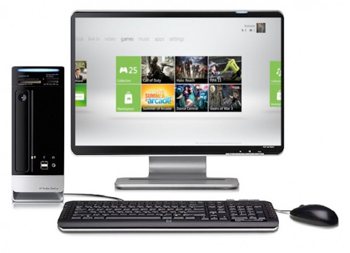
Rumor: Windows 8 to play Xbox 360 games?


Take this with a grain of salt, but a number of sites are reporting today that the next version of Microsoft's desktop operating system, Windows 8, will let users play Xbox 360 discs on their PCs.

There isn't much information available at this point, and naturally many will be wondering why Microsoft would potentially cannibalize sales of its own console. But with Windows 8 still about a year away, and the company's next-gen console announcement expected in some form at E3 2012, the pieces could fall into place for a smart succession plan of Microsoft's gaming platform.

For one thing, the move would drastically increase the installed user base for the platform, allowing Microsoft to continue riding this console generation and profiting from game sales as it shifts focus to the next hardware update.

The next Xbox may or may not feature backwards compatibility. If Microsoft is developing some sort of emulator for Windows, I don't see a reason why the same functionality wouldn't make it to the 360's successor, but even if it doesn't Microsoft would be covering its back through this PC initiative by protecting people's investment in Xbox 360 games.

Microsoft has previously said it will relaunch PC gaming with Windows 8. The wealth of games that would come through this Xbox 360 integration could be a strong selling point for its next operating system, though hardcore gamers will certainly expect more than just being able to play console games with a mouse and keyboard.

According to the rumor, Xbox 360 on PC will require an Xbox Live Gold-like subscription service, but online gameplay will specifically prohibit cross-platform matchups to keep the playing field leveled. Take it for what it is: a rumor. But with that said, would you be interested in seeing Xbox 360 functionality on PCs with Windows 8?

Wednesday, 13 July 2011

With only 1000 days left of extended support, don’t you think it’s time to retire Windows XP?

Wouldn’t it be great if the glory days lasted forever? But reality is trophies get dusty, records are broken, and what it took to be the best ten years ago, just isn’t enough for today’s standards. Things get better, faster. And eventually, it’s time to move from good enough to something much better.

Windows XP had an amazing run and millions of PC users are grateful for it. But it’s time to move on. Two reasons: 1) Extended support for Windows XP is running out in less than 1000 days, and 2) there’s an OS out there that’s much better than Windows XP.

On April 8, 2014, security patches and hotfixes for all versions of Windows XP will no longer be available. So bottom line, PC’s running Windows XP will be vulnerable to security threats. Furthermore, many third party software providers are not planning to extend support for their applications running on Windows XP, which translates to even more complexity, security risks, and ultimately, added management costs for your IT department if you’re still managing Windows XP environments. To learn more about Microsoft’s Support Lifecycle policy, please visit Microsoft Support.

The good news is there is a great alternative to Windows XP — Windows 7. And moving on is easier than ever with powerful tools and guidance to help you every step of the way. In fact, some of the world’s most prominent companies have already moved to Windows 7. Organizations like Boeing, InfoSys, Dell, Purdue University, Samsung, Royal Mail Group, and BMW are now benefiting from the cost-savings, security, and productivity gains Windows 7 delivers.

Act quickly because time is limited, and organizations that have not started deployment or in the early phases of the project need to accelerate. According to a recent Garter report “more than 50% of organizations that do not start deploying Windows 7 by early 2012 will not complete their deployments before Windows XP support ends, and will incur increased support costs.” (see Creating a Timeline for Deploying Windows 7 and Eliminating Windows XP)

So are you ready to retire Windows XP? Here are 7 things to help you make the move to Windows 7:

1. Watch the Is Windows XP Good Enough? Really? roundtable and hear a panel of experts dive into IT Pro questions and common issues around moving off of Windows XP.

2. Fire up the Windows 7 ROI calculator and see how much you could save by moving to Windows 7. From reducing help desk cost to cutting down energy consumption to automating common IT tasks, the savings to your business could add up!

3. Check out the suite of Windows 7 migration tools available on the Springboard Series that streamline planning, application compatibility, testing and deployment of Windows 7 including the Microsoft Assessment and Planning (MAP) Toolkit, Microsoft Application Compatibility Toolkit (ACT), and Microsoft Deployment Toolkit (MDT). See all of these tools in action with this demonstration from the recent Springboard Tour.

4. Build your Windows 7 muscles with our Windows 7 Deployment Learning Portal.

5. Become a Springboard Series Insider to get monthly tips and tricks on Windows, Office and Internet Explorer.

6. Follow us on Twitter @MSSpringboard for the hottest news on IT Pro deployment information.

7. Try Windows 7 today. Download the Windows 7 Enterprise 90-day Trial and get started testing your apps and hardware.

Thank you : http://networkedblogs.com/kkBeZ

Saturday, 9 July 2011

Facebook Offers Video Chat in Arrangement With Skype


PALO ALTO, Calif. — Hoping to give its users a more intimate way to stay in touch, Facebook on Wednesday introduced video chatting inside its online social network through a deal with Skype, the Internet calling service.


The new feature allows users a way to connect with friends other than just posting messages, said Mark Zuckerberg, Facebook’s founder and chief executive, said at a news conference here at the company’s headquarters. “It’s so easy, so minimal to use,” he said.

Last week, Google introduced Google+, its latest and most serious challenge yet in social networking, which includes video chatting for up to 10 people in an area of the site called Hangouts. So far, Google has limited the number of people who can sign up for the networking service.

To a certain extent, Facebook is playing catch-up — an unfamiliar position for a company that has grown to 750 million users worldwide, a figure Mr. Zuckerberg disclosed at the news conference. He has spent the last few years lifting Facebook past its rivals — it had 500 million users a year ago — but now faces questions about why he is following their lead.

The new Facebook service does not allow for group video chats, for example. It is also not available on mobile phones, unlike Skype’s smartphone apps.

Danny Sullivan, editor of Search Engine Land, an industry blog, said Facebook’s new service at least lets the company counter Google’s move with its video chat. But in the end, he said, video chatting has been widely available for years in a variety of ways, like through instant messaging services, Skype and Apple’s FaceTime.

“I didn’t get the impression that people were finding it difficult to find one-to-one video chatting if they wanted to,” Mr. Sullivan said. “This potentially makes it easier for more people to get going, but I don’t see it as that hard to begin with.”

To start a video chat on Facebook, users click a button on their Facebook chat list or on a friend’s profile page. A box will then appear on the computer screen of that friend to either accept or decline the call.

Conversations take place inside a window that pops up within the browser. Downloading a plug-in is required to make and receive calls.

Video chatting will be available to all Facebook’s users in the coming weeks. For now, however, users can access it at facebook.com/videocalling.

For Skype, the partnership with Facebook provides a chance to have more visibility beyond its 170 million users. The service is free on Facebook, but Tony Bates, Skype’s chief executive, raised the possibility of eventually making paid calls available to Facebook users.

Making calls from computer to computer through Skype is free. But people who use Skype to call a landline or a mobile phone must pay. Facebook’s alliance with Skype expands an existing partnership between the two companies. Their cooperation started last year when Skype let its users connect with their Facebook friends from Skype and to get news feeds.

Last month, the Skype added a Facebook contacts tab and let Skype users send instant messages to their Facebook friends and comment on their friends’ status — all without leaving the Skype window.

But making Skype available on Facebook is risky and may, in the short term, undermine its business, said Greg Sterling, an analyst at Opus Research.

Facebook’s users will most likely flock to the new video chatting service, he said, while avoiding visiting Skype’s branded service directly.

“Obviously this is a great feature for Facebook — it’s really simple and a lot of people will use it,” Mr. Sterling said. But he added, “I think it’s going to have an adverse impact on Skype.”

Mr. Bates said: “We’ve always wanted to be as ubiquitous as possible. The long-term partnership far outweighs users moving from Skype, or visa versa.”

Microsoft is closing in on its acquisition of Skype for $8.5 billion. The purchase, announced two months ago, would give Microsoft a bigger footprint in online communications for consumers and corporate customers.

Microsoft, through its Skype acquisition, would also strengthen its ties to Facebook. Microsoft bought a small stake in Facebook in 2007, and it continues to provide search results within Facebook.

During the news conference on Wednesday, Mr. Zuckerberg signaled that the Skype integration was the first of several deals that would add services to Facebook with the help of other companies.

“Independent entrepreneurs, or entrepreneurs that focus on one thing, will always do better than a company that tries to focus on a million things,” Mr. Zuckerberg said in a comment that could be interpreted either as an acknowledgment of Facebook’s limits, or as a dig at Google for its broad ambitions.


Tuesday, 5 July 2011

As Deal With Twitter Expires, Google Realtime Search Goes Offline


Yesterday, we reported that Google Realtime Search had mysteriously disappeared. Today comes the reason why: Google’s agreement with Twitter to carry its results has expired, taking with it much of the content that was in the service with it.

Google sent us this explanation:

Since October of 2009, we have had an agreement with Twitter to include their updates in our search results through a special feed, and that agreement expired on July 2.
While we will not have access to this special feed from Twitter, information on Twitter that’s publicly available to our crawlers will still be searchable and discoverable on Google.

Google also stressed that went Google Realtime Search relaunches — something it says will happen but with no set time frame — it will include content from a variety of sources and not just be solely devoted to Google+ material. The company said:

Our vision is to have google.com/realtime include Google+ information along with other realtime data from a variety of sources.

Google Realtime Search had carried content from a variety of services beyond Twitter, including Facebook fan page updates. When we last wrote about the service in April, when it added Quora and Gowalla content, this was the full source list:

Twitter tweets
Google News links
Google Blog Search links
Newly created web pages
Freshly updated web pages
FriendFeed updates
Jaiku updates
Identi.ca updates
TwitArmy updates
Google Buzz posts
MySpace updates
Facebook fan page updates
Quora
Gowolla
Plixi
Me2day
Twitgoo

Still, as said, Twitter was the by far the most dominant content within the service. It’s unclear why the agreement was allowed to expire. Twitter sent me this:

Since October 2009, Twitter has provided Google with the stream of public tweets for incorporation into their real-time search product and other uses. That agreement has now expired. We continue to provide this type of access to Microsoft, Yahoo!, NTT Docomo, Yahoo! Japan and dozens of other smaller developers. And, we work with Google in many other ways.
For its part, Google said:

Twitter has been a valuable partner for nearly two years, and we remain open to exploring other collaborations in the future.
I’d say we have a bit of a standoff.

One reason I’d expect Twitter would do a deal with Google sometime soon is that otherwise, people largely have no way to locate tweets that are older than a few days.

Twitter has largely outsourced the service of Twitter search longer than a few days to Google, a deliberate decision so that Twitter could focus on other search features, such as its new Top Tweets feature, as covered more below:

Move Over Time Sorting: Twitter Gets “Top Tweets” Search Results
The end of Google Realtime Search means that tiny search engine Topsy remains in the enviable situation of having the only major Twitter archive available on the web, to my knowledge. The stories below cover more about this:

Where Have All The Old Tweets Gone?
All The Old Tweets Are Found: Google Launches Twitter Archive Search
Topsy: Now Searching Tweets Back To May 2008
Bing Social Search, which is a confusing name for what’s really Bing’s realtime search service, also has a deal with Twitter. Indeed, both the Twitter deals with Google and Microsoft were announced on the same day.

Twitter’s deal appears to be continuing with Bing. I still see search results showing up over there that include Twitter. But Bing’s service never went as far back in time as Google’s.

While Twitter may need Google to continue offering archive search, Google also potentially needs Twitter in another way. Google may have lost some of the data it has recently been using to bring social signals into its results, as covered more below:

Google’s Search Results Get More Social; Twitter As The New Facebook “Like”
I’ve not yet been able to check on whether Google Social Search and other parts of Google have been impacted by the deal’s end. I’ll look at that later — I’m heading off to enjoy the 4th Of July myself now.

Update: Google has sent us a statement addressing the issue above:

While we will not have access to this special feed from Twitter, information on Twitter that’s publicly available to our crawlers will still be searchable and discoverable on Google.
As for other features such as social search, they will continue to exist, though without Twitter data from the special feed.

You can certainly understand why Google+ has become even more important to the service now. While Google has gotten by largely without social signals from Facebook, having its own data from Google+ gives it insulation if it now has to get by without Twitter signals, as well.

Saturday, 2 July 2011

Nokia Windows Phone 7 apps to work on rivals' handsets


Nokia will do all it can to enhance the Windows Phone 7 experience when it comes to software as well as hardware, Marco Argenti, senior vice president of Developer and Marketplace at Nokia told Pocket-lint in a one-to-one briefing in London:

“Windows Phone 7 doesn’t need us to add more layers," he said. "But we will work hard to enhance areas like mapping, commerce and discovery.”

The move will see the company create a number of dedicated apps for the platform - and not just for use with its phones, but, surprisingly, others from HTC, Samsung and LG too.

It’s something that, so far, other phone makers have steered away from, having their own dedicated area within the Windows Phone 7 Marketplace in order to encourage consumers to buy their phones over other models. Nokia, however, is breaking away from that model:

“Every Nokia App will be available on every phone,” insisted Argenti.

But surely there will be exceptions? A pause is followed by the acknowledgement that while the apps will work with any phone, some will be exclusive for Nokia users for a set time. Or, when it comes to things like mapping, they will be heavily built into the OS, making it hard for a HTC user to nab it.

Maps is going to be one of the key battlegrounds for Nokia.

In our meeting in a quirky hotel in Victoria, just a stone's throw from Microsoft’s London headquarters, Argenti talked up the company’s mapping solution, promising much, but sadly giving us little detail to share.

What does appear apparent though, is that the experience will be akin to what mobile Ovi Map users have now, with a big play on discovery, 3D mapping, and getting the information you need out of the OS. Bing maps will be playing second fiddle on the Finnish company’s devices.

“Maps is one area we really want to improve,” added the man in charge of 700 staff around the world and responsible for managing everything from the creation of apps to the selling of them on not only Windows Phone 7, but MeeGo and Symbian.

“I won the lottery on that one,” he claimed, after we comment that it sounds like a tough job. “But it’s got a lot easier since the announcement.”

That “announcement” refers to the agreement signed between Nokia and Microsoft in February, which will see the operator adopt Windows Phone 7 as well as Symbian.

“Since the announcement, developers have really embraced Windows Phone 7. The app store is now growing by over 1,000 apps a week and we are actively going after companies that already have a good Symbian offering to get them to create a Windows Phone 7 app,” said Argenti.

His job has got simpler too: “It’s much easier to get an audience, especially in the US.”

It seems Microsoft has a new friend. It’s certainly not something we’ve heard Samsung, LG or HTC doing.

But, it’s not just about getting plenty of apps in store to stack those shelves. Nokia is keen to help people buy them, and help people discover them too.

On the commerce side of things, Nokia is going to be implementing the ability to buy apps through the operator.

It already has deals in 191 countries to do just that and, combined with NFC technology (a virtual given for the new phones it makes), Nokia hopes the idea of not only buying apps but also a cup of coffee, and having them all charged to your monthly operator bill will be something that people are keen to enjoy.

That’s a move that is going to make the operators very happy, and open up a whole market of new shoppers who don't have credit cards, or don’t want the extra hassle of providing details to Microsoft.

On the discovery side, Argenti is keen to help developers get seen. Nokia will use a dedicated area on the phone to highlight local developers: “We don’t want to branch the experience, but there are many cases where a local app might be the best in that country, but doesn't get the coverage it deserves because it’s not big globally,” he said.

If that does work, and there’s no reason to think that it wouldn’t as Nokia has employed the same tactics for its music service in the past, developers could get the extra push they need.

Apple, Google and Microsoft know how hard it is to get people to discover new apps and this might just be the ticket.

As for whether or not the Nokia Windows Phone 7 device will ditch the hardware keys altogether, Argenti isn’t telling. He did, however, hint that the N9 [and therefore “Sea Ray” leaked prototype] shows off plenty of ideas and features that the company is working on and that each device they create will look at what is needed for the task at hand.

What is certain, is that Argenti is very much the man in charge of how Nokia will create it’s Windows Phone 7 software offering, and that the company isn’t just leaving it all up to the hardware boys to tempt you into switching to the Microsoft platform.